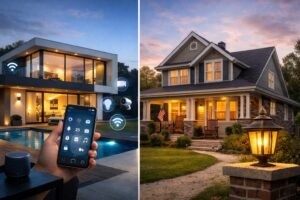
Smart lighting has evolved from a novelty into a practical, energy-efficient, and customizable feature for modern homes. Beyond simple illumination, it allows homeowners to control ambiance, save energy, and integrate lighting into broader home automation systems. In 2026, smart lighting is accessible, user-friendly, and a great entry point into home automation.
Why Smart Lighting Matters
Modern smart lighting offers benefits far beyond turning lights on and off:
Energy efficiency: LEDs and smart controls reduce electricity usage
Convenience: Control lights remotely via apps or voice assistants
Customization: Adjust brightness, color, and schedules for different moods
Automation: Integrate with routines, sensors, and other smart devices
Security: Automated lighting can deter intruders by simulating occupancy
Smart lighting improves comfort, utility, and safety while adding a touch of sophistication to any home.
1. Choose the Right Smart Bulbs
Why it stands out: Smart bulbs are the easiest way to upgrade existing lighting.
Key options:
Color-changing bulbs: Adjust hue and temperature for mood lighting
White bulbs with dimming: Simple, energy-efficient illumination
Tunability: Some bulbs allow fine-tuning of warm/cool tones
Best for: Homeowners looking for instant smart lighting without replacing fixtures.
2. Smart Light Switches for Fixed Fixtures
Why it stands out: Smart switches control ceiling lights, wall lamps, and chandeliers.
Benefits:
Control multiple bulbs at once
Integrate into automation routines
Work with existing fixtures without needing new bulbs
Best for: Rooms with multiple lights or hardwired fixtures, such as living rooms and kitchens.
3. Consider Motion Sensors
Why it stands out: Motion-activated lighting improves convenience and energy efficiency.
Features:
Automatically turn lights on when entering a room
Turn off lights after inactivity to save power
Integrate with security routines
Best for: Hallways, bathrooms, and entryways where hands-free lighting is useful.
4. Use Smart Plugs for Lamps and Accent Lighting
Why it stands out: Smart plugs turn ordinary lamps and decorative lights into smart devices.
Benefits:
Remote on/off control
Scheduling and automation
Works with any plug-in light source
Best for: Living rooms, bedrooms, or decorative lighting setups.
5. Integrate With Voice Assistants
Why it stands out: Voice control adds convenience and accessibility.
Supported platforms:
Amazon Alexa
Google Home
Apple HomeKit
Voice commands allow:
Turning lights on/off
Adjusting brightness and color
Activating scenes and routines
Best for: Users who want hands-free control and integration with other smart devices.
6. Create Lighting Scenes and Automation
Why it stands out: Scenes and automation customize lighting for different times and activities.
Examples:
“Morning Routine”: Lights gradually brighten to simulate sunrise
“Movie Mode”: Dim living room lights for optimal viewing
“Away Mode”: Randomized lights simulate occupancy for security
Automation saves energy, improves convenience, and enhances home ambiance.
7. Layer Lighting for Depth and Mood
Why it stands out: Using a combination of ambient, task, and accent lighting creates a more comfortable and visually appealing space.
Tips:
Ambient: Ceiling lights for general illumination
Task: Desk or reading lights for specific activities
Accent: LED strips, floor lamps, or wall washers for decoration
Layered lighting ensures your home is functional and stylish.
8. Monitor Energy Usage
Why it stands out: Some smart bulbs and switches track energy consumption.
Benefits:
Identify which rooms consume the most electricity
Optimize schedules to save power
Set goals for reduced energy use
Best for: Eco-conscious homeowners or anyone looking to lower utility bills.
9. Choose Reliable Brands
Why it matters: Compatibility, durability, and support are crucial for long-term use.
Top smart lighting brands in 2026 include:
Philips Hue
LIFX
TP-Link Kasa
Nanoleaf
Choosing trusted brands ensures firmware updates, app reliability, and integration with ecosystems.
Frequently Asked Questions (FAQ)
Q1: Can I mix brands in a smart lighting setup?
Yes, as long as the bulbs or switches are compatible with your chosen ecosystem (Alexa, Google Home, or HomeKit).
Q2: Do smart lights work without Wi-Fi?
Some functions may work locally, but most remote control and automation features require Wi-Fi.
Q3: Are smart bulbs energy-efficient?
Yes. Most smart bulbs use LED technology, consuming up to 80% less energy than traditional incandescent bulbs.
Q4: How long do smart bulbs last?
LED smart bulbs typically last 15,000–25,000 hours, depending on usage.
Q5: Can smart lighting improve home security?
Absolutely. Scheduled or motion-activated lights can deter intruders by making your home appear occupied.
Final Thoughts
Smart lighting solutions transform modern homes by combining convenience, energy efficiency, and aesthetic appeal. Whether you start with smart bulbs, switches, or motion sensors, integrating your lighting into a broader smart home ecosystem allows for automation, remote control, and personalized scenes. By layering lighting, using reliable devices, and creating automation routines, your home becomes brighter, safer, and more enjoyable—without the complexity of traditional setups.